.jpg)

The kickoff meeting feels electric. Leadership signs off on a bold roadmap, vendors are lined up, slide decks sparkle with target-state diagrams. Twelve to eighteen months later, the project is quietly “rephased,” scope is cut, and the legacy platforms are still carrying the weight of the business. This pattern is common, not exceptional. According to Advanced's Mainframe Modernization Business Barometer, 74% of organizations start a legacy system modernization project but fail to complete it, despite the money, effort, and executive attention poured in.
Modernization promises a lot: faster delivery, reduced risk, better customer experiences, more efficient operations. Yet the road between “strategic intent” and “working reality” is full of traps. Some are obvious-budget cuts, skill gaps, vendor failures. Others are subtle, such as conflicting incentives, overconfidence in new platforms, or neglecting the data foundations that modern applications rely on.
The good news is that stalled modernization is not inevitable. Once the real reasons projects stall are understood, strategies can be designed that fit how organizations actually work, not just how they look in diagrams. That shift-from aspirational plans to pragmatic execution-is where modernization efforts finally start to stick.
So, why many modernization efforts stall
When modernization programs slow down or grind to a halt, the easiest explanation is “technology.” The stack was wrong, the tools were immature, the integration was harder than expected. Technology absolutely matters, but in most stalled initiatives, the root causes are upstream: unclear goals, misaligned stakeholders, and governance that rewards short-term wins over long-term resilience.
The irony is that leaders recognize the problem. In the NTT DATA Lifecycle Management Report, 80% of organizations agree that inadequate or outdated technology is hindering innovation efforts. That level of consensus should create momentum. Yet many programs still fizzle because the organization has not truly agreed on what “modernization” is supposed to achieve or how progress will be judged.
Successful modernization efforts tend to look less like moonshots and more like a disciplined portfolio of changes, each with a clear business outcome. Struggling efforts often look like massive, multi-year undertakings where everything is supposed to change at once-and where no single team feels accountable for the full value stream from idea to operation.
Vague outcomes and moving targets
If the modernization narrative is “move off the mainframe” or “get to cloud,” projects are already on shaky ground. Those are means, not ends. Without explicit outcomes-cut claim processing time in half, reduce outages, enable same-day product releases-teams fall back to technical milestones: migrations completed, lines of code rewritten, servers decommissioned. Those are necessary, but they do not capture value on their own, and they make it hard to prioritize when trade-offs appear.
Underestimating legacy complexity
Legacy systems are rarely just “old tech.” They encode decades of regulatory interpretation, business rules, edge cases, and institutional memory. Documentation is incomplete or wrong, key maintainers are nearing retirement, and dependencies are woven across dozens of other systems. When that complexity is not fully appreciated, roadmaps assume a straight line where reality is anything but. Projects promise aggressive timelines that only hold if nothing unexpected emerges-yet surprises are all but guaranteed.
Technology myths that quietly derail progress
Beyond governance and alignment, misconceptions about technology itself often push modernization initiatives into risky territory. These myths tend to show up in strategy slides and vendor pitches, then trickle down into architecture decisions and funding choices. Over time, they create pressure to chase an idealized “future state” that few organizations can reach in one leap.

A striking example is the belief that the only credible destination is a pure cloud, no-mainframe landscape. Yet a recent report from Advanced found that 92% of global enterprises are adopting hybrid strategies, keeping mainframes in the mix as part of pragmatic modernization. That does not mean cloud is optional. It means high-performing organizations treat modernization as a balancing act, not a purity test.
Myth 1: Modernization means rip-and-replace
The boldest-sounding plans often promise to retire entire legacy estates in one sweeping move. It is an appealing story: endure short-term pain, emerge in an entirely new landscape. In practice, rip-and-replace approaches amplify risk. They compress too many changes into narrow time windows, create long periods with no visible value, and leave little room to respond when assumptions prove wrong. Incremental modernization-strangling legacy systems via new APIs, decomposing high-value capabilities first, sequencing migrations around business cycles-is less glamorous, but far more survivable.
Myth 2: Technology alone fixes process and culture
Modern architectures enable faster change, but they do not force it. A team can run containerized services on cutting-edge infrastructure and still move at mainframe speeds if approvals, testing, budgeting, and release management all operate on quarterly cycles. When modernization conversations focus almost entirely on platforms, tooling, and vendors, the harder work-retraining teams, redesigning processes, redefining ownership-gets deferred. Eventually, frustration grows as the “modern stack” fails to deliver on its promise, and support for the program erodes.
Data Modernization: the opportunity hiding in plain sight
Many organizations approach modernization primarily as an application and infrastructure problem. Data is treated as something that will “come along for the ride.” Then integration projects hit a wall, reports break, analytics teams cannot trust their numbers, and AI initiatives stall because quality training data is not available. The pattern reveals a blind spot: modernization without a data strategy is modernization in name only.
Most enterprises are sitting on underused data assets. According to analysis from Lumenalta, companies analyze only about 0.5% of the data they collect, leaving enormous value untapped. That underutilization shows up as missed personalization opportunities, slower fraud detection, weaker operational insight, and AI pilots that never graduate to production because the data foundation is too fragile.
Without data readiness, modernization slows to a crawl
Modern applications depend on consistent, accessible, well-governed data. When data is fragmented across silos-legacy databases, spreadsheets, shadow IT solutions-every integration becomes a bespoke project. Teams spend more time reconciling and cleansing than building. Conflicting versions of “truth” trigger governance disputes that can stall releases. By contrast, organizations that invest early in data catalogs, lineage tracking, quality checks, and a clear operating model for data ownership find that application modernization moves more smoothly and delivers value faster.
Starting small but thinking long-term
A data modernization strategy does not have to begin with a massive platform build. Targeted initiatives-consolidating critical reference data, cleaning up key customer datasets, standardizing event schemas-can create immediate wins while laying groundwork for more ambitious efforts. The key is to treat data as a product with its own lifecycle, stakeholders, and roadmap, not just a byproduct of applications. When that shift happens, modernization conversations naturally expand from “what apps should be moved?” to “what data do those apps rely on, and how will that data evolve?”
Modernization in Government and highly regulated sectors
Public sector agencies and organizations in heavily regulated industries face unique constraints. Legacy systems often sit at the heart of critical services-benefits distribution, tax processing, licensing, payment clearing. Downtime is not just inconvenient; it has social, legal, or systemic consequences. Risk appetite is understandably low, and the scrutiny on cost, transparency, and security is intense.
At the same time, expectations are rising. The public has become accustomed to seamless digital experiences in the private sector and increasingly expects the same from governments and regulators. EY’s 2024 Government and Public Sector Trends Survey found that 67% of government leaders say their agency’s IT infrastructure is not built to handle emerging technologies, and the survey quotes Stacy Lindsay noting that “the public sector can benefit from the innovation and potential of emerging technologies the same way that private sector industries do” (EY’s 2024 Government and Public Sector Trends Survey). That tension-between real constraints and rising expectations-defines modernization in these environments.
Constraints are real, but so is the cost of standing still
Legacy platforms in regulated sectors often carry decades of policy decisions, special-case handling, and compliance logic. Replacing them wholesale is risky, but keeping them unchanged carries its own hazards: mounting technical debt, inability to respond to new regulations quickly, and growing vulnerability to cyber threats. A realistic path usually involves carving out less critical capabilities first, building integration layers that protect core systems while exposing their functionality via APIs, and pairing every technical change with a clear risk and compliance narrative that decision-makers can trust.
Trust, transparency, and accountability
Modernization programs in public and regulated environments succeed when IT, legal, risk, and program owners move together. That requires more than status dashboards. It requires shared language about risks and trade-offs, clear documentation of decisions, and governance forums where concerns can be addressed early instead of surfacing as late-stage vetoes. When non-technical leaders understand both the risks of change and the risks of inaction, they are more willing to support pragmatic, staged modernization instead of waiting for a hypothetical “perfect” moment that never arrives.
A practical playbook to keep modernization moving
Across industries, one pattern stands out: modernization works best when framed as an ongoing capability, not a one-time project. Phil Buckellew, President of the Infrastructure Modernization Business Unit at Rocket Software, captures this dynamic bluntly, noting that “modernization is an imperative for achieving both business and technology goals, yet it comes with a range of challenges,” as highlighted in research from Rocket Software. Treating modernization as a capability means designing for learning, adjustment, and continuous improvement from the start.
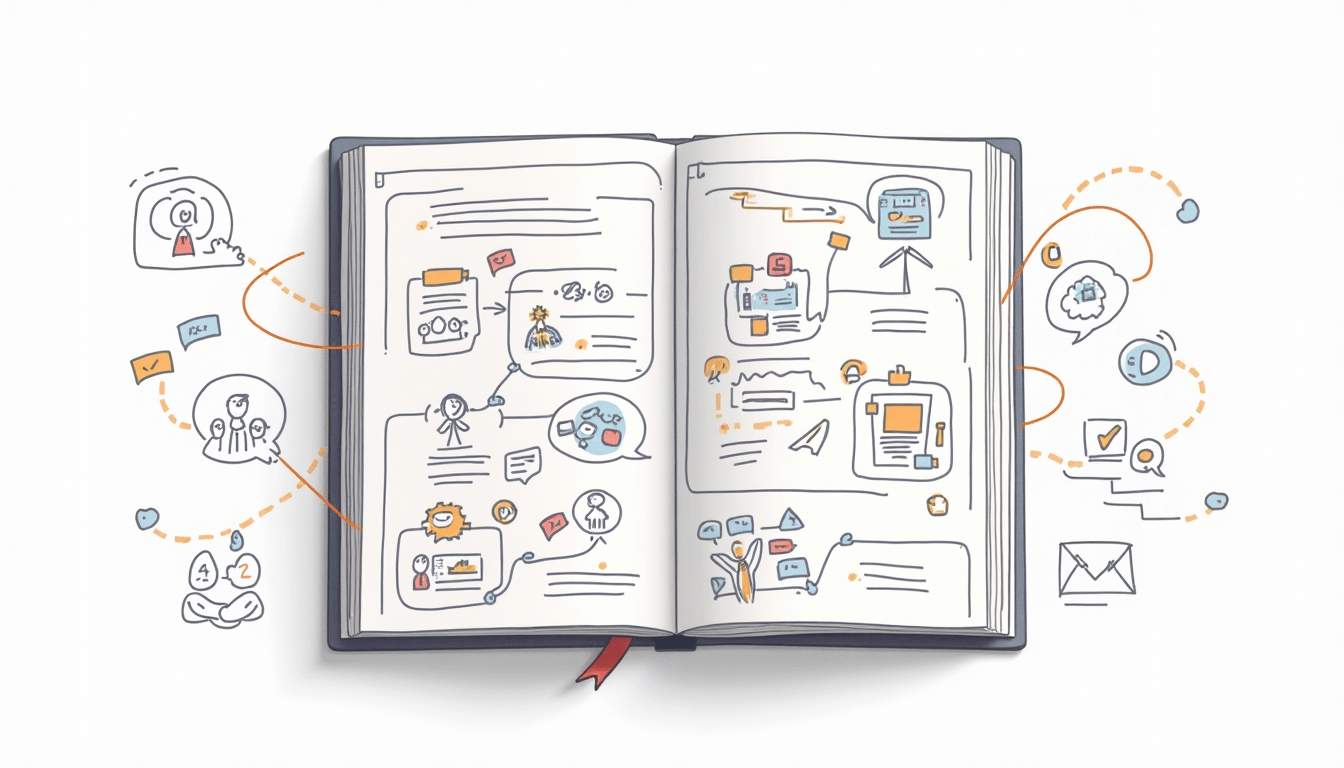
That shift does not require a blank slate. It does, however, demand different questions: not “What will our architecture look like in five years?” but “How fast can this organization safely change its systems, and how can that capacity be expanded over time?” The answers shape not just technology choices, but funding models, team structures, and success metrics.
Anchor everything in business outcomes
Modernization initiatives gain resilience when every major workstream ties directly to measurable outcomes that business leaders care about: reducing time to launch new products, improving customer satisfaction, shrinking operational risk, or cutting specific cost drivers. Those outcomes should guide prioritization and be revisited regularly. When leaders see concrete progress-faster processing times, fewer incidents, better analytics-they are far more inclined to protect modernization budgets during competing demands.
Break modernization into products, not projects
Instead of framing modernization as a series of large, time-bound projects, treat core business capabilities as long-lived products with dedicated cross-functional teams. Each product team owns its slice of the legacy estate, its roadmap, and its journey from current to target state. This structure improves accountability, enables more continuous delivery of value, and reduces the coordination overhead that bogs down monolithic programs. Progress becomes a series of small, visible steps rather than one massive leap.
Design for hybrid reality, not idealized endpoints
For most organizations, the future will be hybrid for a very long time: some workloads on cloud, some on-premises, some still on mainframe, all connected via APIs and integration platforms. Accepting that reality early shapes sustainable choices. Instead of forcing everything onto a single “strategic platform,” focus on interoperability, observability, security patterns, and governance that span environments. This mindset prevents paralysis-teams no longer have to wait for the “one true architecture” before taking steps that clearly reduce risk and improve agility.
Build modernization literacy across the organization
Finally, modernization can no longer be the sole domain of IT. Product managers, operations leaders, finance, compliance, and front-line teams all influence whether change sticks. Investing in shared literacy-what modernization is, what trade-offs exist, how to spot technical debt before it becomes crisis-level-makes conversations more productive and decisions more durable. Over time, modernization shifts from something done “to” the business to something done “with” and “through” it.
Organizations that escape the trap of stalled modernization rarely do so because they found the perfect tool or hired a single visionary leader. They succeed because they are honest about why efforts fail, willing to challenge comforting myths, and committed to aligning technology change with business outcomes, data foundations, and human reality. That combination turns modernization from an aspirational slogan into a repeatable discipline-and that is when the legacy of modernization programs stops being unfinished slide decks and starts being durable, compounding value.
From Roadmaps to Results: Proving Modernization Value Fast
Transitioning to this model requires momentum, which is exactly what many stalled projects lack. When the path forward is blocked by a specific technical knot, Control provides the necessary intervention. Instead of adding more roadmap slides, Control deploys a focused, AI-native team to unstick the immediate engineering challenge. By fixing a critical blocker at a fixed price, you prove the value of modernization in weeks, earning the trust required to scale into a long-term product capability.