
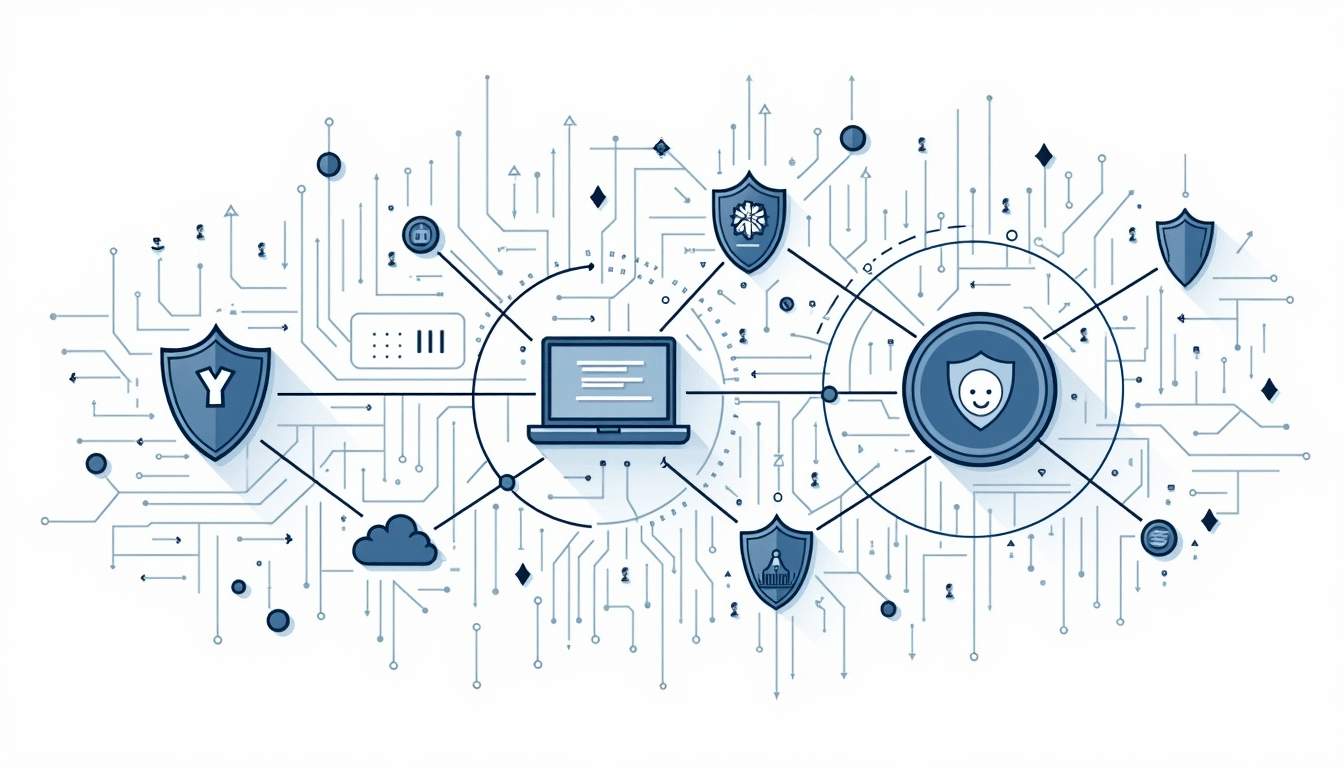
A major financial institution recently faced a cyber incident because a tiny oversight in its microservices architecture left one component exposed. This incident led to a comprehensive review of how security should be integrated into every layer of microservice deployments.
With billions of API calls processed every minute in microservice systems - a figure that highlights the robust transactional nature of distributed computing - the need to address security holistically has never been more pressing.
From the basic authentication of API endpoints to advanced encryption techniques, many strategies exist to secure these dynamic environments. However, the journey from designing microservices to implementing top-tier security measures is filled with challenges.
We will explore how to implement effective security in microservices, discussing strategic measures, critical practices, and advanced technologies that mitigate risks and safeguard data integrity.
Understanding microservices security landscape
Microservices architectures enable organizations to decompose applications into smaller, independently deployable units. Each service is responsible for a specific business function and communicates with other services through APIs.
This model provides agility and scalability, but it also demands a refined approach to security. As each service communicates openly over the network, vulnerabilities can multiply if security isn’t an integral part of the design.
Recent studies have identified more than 1,600 unique vulnerabilities in microservice applications. Each new service interface creates another potential entry point for attackers.
So, incorporating security best practices at every layer (from authentication to data encryption) is crucial. These vulnerabilities serve as a wake-up call for organizations to adopt a more rigorous security framework that extends from code development to monitoring.
Securing communication between different services
Service-to-service communication is a critical vulnerability point in any microservices system. As microservices exchange significant amounts of data in real-time, ensuring secure channeling is non-negotiable.
Mutual TLS forms the backbone of securing inter-service communication by encrypting data while authenticating participating services.

The encryption protocol verifies that both services are exactly who they claim to be and that data is transmitted securely.
This mechanism is extremely efficient; experts assert that the use of mutual TLS can lead to up to a 95% reduction in man-in-the-middle attacks.
By integrating these protocols into API gateways and internal networks, organizations can considerably limit the exposure of sensitive data.
Far beyond technical mechanisms, robust access controls and endpoint verification play equally significant roles. Every microservice should have explicit and minimal necessary permissions, restricted by role-based access controls.
This approach ensures that even if one component is compromised, its access is clearly restricted within the larger ecosystem.
Leveraging orchestration tools for enhanced security
Leveraging orchestration platforms is crucial to maintain consistency and security in microservices environments.
Kubernetes has emerged as the platform of choice for many organizations, with an adoption rate that saw a 38% increase recently according to recent reports.
Such growth in adoption is largely due to Kubernetes' ability to handle a myriad of deployment clusters, making it easier to manage security policies across enterprise ecosystems.
Kubernetes, for instance, facilitates automated scaling, continuous deployment, and integrated security features that help secure containerized applications against common vulnerabilities.
This automated enforcement minimizes configuration drifts and keeps the security posture intact across rapid deployments.
In many cases, orchestration itself simplifies the management of multiple security controls via policy-as-code methodologies.
Implementing mesh technologies
Service mesh platforms have become a key asset in strengthening microservices security. By managing service-to-service communication through a dedicated infrastructure layer, service meshes embed security controls directly into the communication fabric.
This not only isolates services but also enforces security protocols at every communication junction.
For instance, almost 54% of enterprises have deployed service mesh platforms to enforce zero-trust microservice networking models.
This integration helps maintain rigorous access control and prevents unauthorized data manipulation across service boundaries.
These mesh solutions also bring enhanced observability and traceability to the architecture. Real-time metrics and logs ensure that any breach or unusual activity can be detected and isolated quickly.
As an additional benefit, properly implemented meshes impose minimal performance overhead while significantly increasing the security across the network.
Managing vulnerabilities through continuous assessment
In an environment as dynamic as a microservice architecture, vulnerabilities are inevitable. As we explained before, a comprehensive study noted 1,667 unique vulnerabilities across microservice applications, making it essential to routinely evaluate each service.
Regular vulnerability scanning, automated testing, and penetration testing offer insights into potential weaknesses before they can be exploited by attackers.
Tooling that integrates these security assessments into the continuous integration/continuous delivery (CI/CD) pipeline proves invaluable. When vulnerabilities are detected early, developers can address them immediately, thus preventing exploitable windows.
Furthermore, frequent audits force compliance with best practices and standards, keeping the architecture resilient against evolving threats.
It is equally important to maintain a strong feedback loop among development, security, and operations teams. This collaboration not only refines the testing methodologies but also ensures that remediation efforts align with overall business risk management strategies.
Tightening access and identity management
Access management is central to microservices security. In environments distributed across several endpoints, centralizing identity management is a challenge that requires a thoughtful strategy.
Each microservice should only be granted the specific permissions it needs to work. This model helps mitigate the risks associated with lateral movement in a breach.
Implementing robust role-based access controls (RBAC) combined with token-based authentication systems simplifies identity verification and ensures that permissions remain up-to-date.
When roles and policies are consistently enforced across all services, the overall security posture is significantly improved.
Additionally, frequent key rotation, multi-factor authentication, and monitoring of access patterns create an environment where anomalous behavior can be swiftly addressed. Such practices are particularly vital when services handle sensitive or regulated data.
Monitoring and logging for proactive threat detection
Continuous monitoring and detailed logging are indispensable components of microservices security. Distributed applications require a unified monitoring strategy; the complexity of inter-service communications often results in incomplete views of the security landscape.
A well-integrated logging system combines access logs, error logs, and event data to create a comprehensive view of all activities.
Security information and event management (SIEM) systems enable proactive threat detection by correlating events across services. These systems highlight anomalous patterns that precede potential attacks, allowing rapid response to emerging threats.
Organizations that leverage detailed monitoring experience fewer surprises when it comes to breaches.
The key to successful monitoring lies in ensuring that each component produces consistent logs that can be gathered and analyzed in real-time. Automated alerts and anomaly detection algorithms help maintain vigilance without overwhelming the operations team.
This comprehensive approach minimizes the window in which breaches can go undetected.
Hardening infrastructure and configurations
Security in microservices extends beyond just application code. It includes the underlying infrastructure and configuration management. Secure defaults for container runtimes, host operating systems, and network configurations are the first line of defense.
In many cases, a lack of attention to baseline security measures can introduce vulnerabilities that attackers easily exploit.
Using automated configuration management systems that enforce secure-by-default settings can prevent many common mistakes. These systems ensure that even as microservices evolve over time, the core configurations remain compliant with security best practices.
As orchestration systems like Kubernetes manage more enterprise clusters, ensuring that configurations are properly secured becomes essential for maintaining overall system health.
Periodic audits of configurations, combined with automated compliance checks, offer an effective way to detect deviations from the standard security baseline.
Centralizing the management of security settings can also help align the deployment practices with broader organizational security policies.
Adopting service-level security patterns
Beyond technical measures such as encryption and access control, service-level security patterns offer a finer-grained approach to securing microservices. These patterns embed security into the business logic of each service, ensuring that data access and manipulation occur only when proper authorization is in place.
Approaches like token-based verification and fine-tuned role assignments have revolutionized microservices security architectures.
An expert from the AL-KINDI Center for Research highlighted that these service-level patterns achieved a 99.995% success rate in preventing unauthorized data access.
Such impressive performance metrics highlight the importance of embedding security in every layer of the application stack. When security becomes a built-in feature rather than an add-on requirement, the resilience of the overall system increases substantially.
Implementation of these patterns also involves designing services to gracefully handle security breaches. For instance, incorporating automated shutdown mechanisms or fail-safes when unauthorized access patterns are detected minimizes the risk of cascading failures.
These strategies are critical in environments where multiple services interconnect, and the failure of one component could have far-reaching impacts.
Integrating security into DevOps pipeline
Embedding security into the DevOps process, often referred to as DevSecOps, is integral to maintaining strong microservices security. Testing, vulnerability scanning, and compliance checks are now automated parts of the integration and deployment phases.
This integration ensures that new code does not introduce vulnerabilities into the production environment.
Security checks integrated into CI/CD pipelines provide rapid feedback to developers. This feedback loop accelerates vulnerability remediation and ensures that no new code is deployed without proper security validation.
Automated tools that check for vulnerabilities during code commits help in identifying potential security gaps early on.
Moreover, comprehensive integration of security into the DevOps pipeline fosters a culture of proactive risk management. Ongoing training and updates about emerging threats ensure that developers and operations teams remain vigilant against sophisticated attack vectors.
Such a proactive approach ultimately reduces the risk of deploying exploitable applications in a fast-paced environment.
Collaboration and continuous improvement
The rapidly evolving threat landscape means that security is never a one-time fix-it requires ongoing assessment and continuous improvement. Organizations must establish structured feedback loops that involve security experts, developers, and operations personnel.
Collaborative platforms where teams share insights and update security protocols are key to staying ahead of hackers.
Regular security drills, cross-team incident simulations, and constant monitoring lay the groundwork for an evolving defense strategy.
Embracing collaboration helps not only in identifying and addressing vulnerabilities quickly but also in ensuring that security considerations are integrated throughout the lifecycle of each service.
This culture of continuous improvement enables organizations to adapt to new threats as they arise. By institutionalizing a routine of security audits and threat modeling exercises, the organization’s security posture will remain robust despite an ever-changing environment.
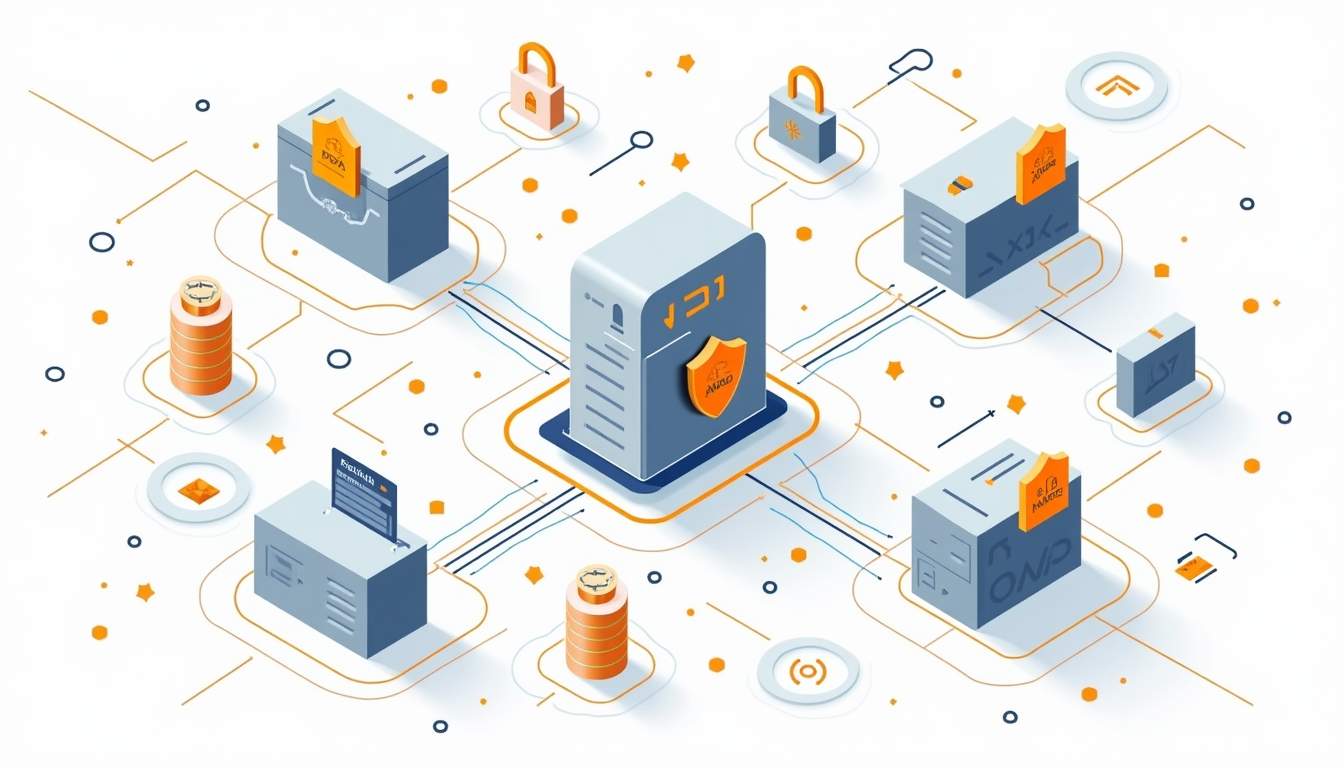
Future trends in microservices security
Looking ahead, microservices security is poised to evolve in line with emerging technologies and threat methodologies. The integration of artificial intelligence in threat detection, advanced behavioral analytics, and improved zero-trust frameworks will redefine how organizations secure their distributed applications.
These advancements will help address persisting challenges, such as the difficulty in monitoring and managing distributed microservices; current insights reveal that over half of organizations face significant challenges in maintaining service dependencies.
Furthermore, as organizations continue to scale their microservices deployments across hundreds of thousands of clusters globally, the emphasis on automated security measures will intensify.
Future security trends are likely to incorporate more advanced cryptography techniques and real-time behavioral analytics that can preemptively block suspicious activities across complex systems.
Keeping pace with these trends requires that security teams maintain a flexible strategy, incorporating new tools and best practices as they emerge. The dynamic nature of microservices means that today’s security solutions might need to be upgraded or replaced tomorrow.
Also, continuous learning and adaptation remain as critical as the security measures themselves.
Our final thoughts: crafting a resilient microservices ecosystem
Implementing security in microservices requires a blend of advanced technology, precise configuration, and an ingrained security culture.
It starts with securing communication channels between services using tools like mutual TLS and extends to embedding security processes across the entire DevOps and operations pipeline.
Each decision from access control and identity management to orchestration and service mesh deployment contributes to a resilient framework that can withstand modern cyber threats.
The journey to a secure microservices environment is ongoing. Organizations that integrate proactive threat detection, continuous monitoring, and automated vulnerability management will be best positioned to manage risks.
As enterprises continue to scale, adopting innovative security patterns and collaborative approaches will ensure that the digital ecosystem remains both agile and secure.
With the dynamic nature of microservices, using best practices and continuously evolving security measures becomes critical. The integration of these advanced security practices not only safeguards systems against vulnerabilities but also reinforces the trust of end-users and stakeholders alike.
By viewing security as an essential component of the entire architecture, organizations can achieve a microservices ecosystem that is both flexible and resilient, ready to face the challenges of tomorrow while maintaining robust defenses today.