
A major financial institution recently discovered that behind their flawless daily operations lay a codebase with billions of lines of legacy COBOL. The old, yet reliable language remains deeply embedded in many organizations even as modern technologies evolve, raising one pressing question:
How can businesses modernize without testing their budgets to the limit? Data shows that over 800 billion lines of COBOL code still power systems globally, with 92% of organizations considering these legacy systems strategic.
The topic is not simply technical-it cuts across profitability, risk management, and long-term strategic planning. Rather than opting for a complete system replacement, companies are increasingly focused on practical, cost-effective approaches that preserve the integrity of critical operations while taking advantage of new technologies.
This article explores several actionable paths for modernizing COBOL systems without breaking the bank, highlighting real-world examples and expert insights along the way.
Why COBOL matters in modern enterprises
Despite its age, COBOL remains the backbone of countless financial, government, and large-scale enterprise operations. Over 92% of organizations consider their COBOL applications strategic, underscoring these systems as irreplaceable assets.
These statistics illustrate that modernization initiatives must take a balanced approach; the focus is not on discarding the old, but on evolving it.
COBOL’s robustness, reliability, and processing power for high-volume transaction processing mean that many legacy systems simply cannot be replaced overnight.
More than 80% of companies rate their mainframes as critical to daily operations. Recognizing these systems as strategic is essential when setting out on a modernization journey.
These legacy systems also face the challenge of remaining relevant in an age of rapidly evolving technology. They run essential services and often hold decades of business logic that is costly, if not impossible, to replicate.
As organizations navigate digital transformation, the goal is to evolve rather than replace, balancing legacy reliability with contemporary efficiency.
The challenges of modernizing COBOL systems
Legacy systems are frequently marred by aging codebases and limited documentation. This makes them particularly challenging to update. Many organizations find themselves using COBOL code that is decades old and has been modified by numerous developers over time.
Complexity stands as a significant barrier.
Statistics indicate that modernizing COBOL code into modern languages like Java has proven worthwhile. In 2023, enterprises re-engineered approximately 180 million lines of COBOL into Java, leveraging modern development frameworks while maintaining operational integrity.
This conversion not only opens the door for integrating CI/CD workflows into established systems, but it also enables companies to refresh their technology landscapes without a complete system overhaul.
Another challenge involves the operational risk during transitions. A failed modernization project can cause extended downtime, which increases the risk of lost revenue and reduced customer trust.
Modernizing legacy applications requires a detailed understanding of both the original design and the new system’s capabilities. Changes, if not carefully managed, might lead to performance bottlenecks or instability in mission-critical services.
Businesses must therefore take a strategic approach that minimizes disruption while maximizing benefit.
Cost-effective modernization strategies
Incremental modernization
One of the most practical options is incremental modernization. Rather than a "big bang" approach that overhauls the entire system at once, organizations can focus on small, manageable changes. Incremental modernization allows systems to continue operating during updates, reducing the risk of disruption.
This approach involves targeting high-impact areas needing urgent updates or integrations with modern systems.
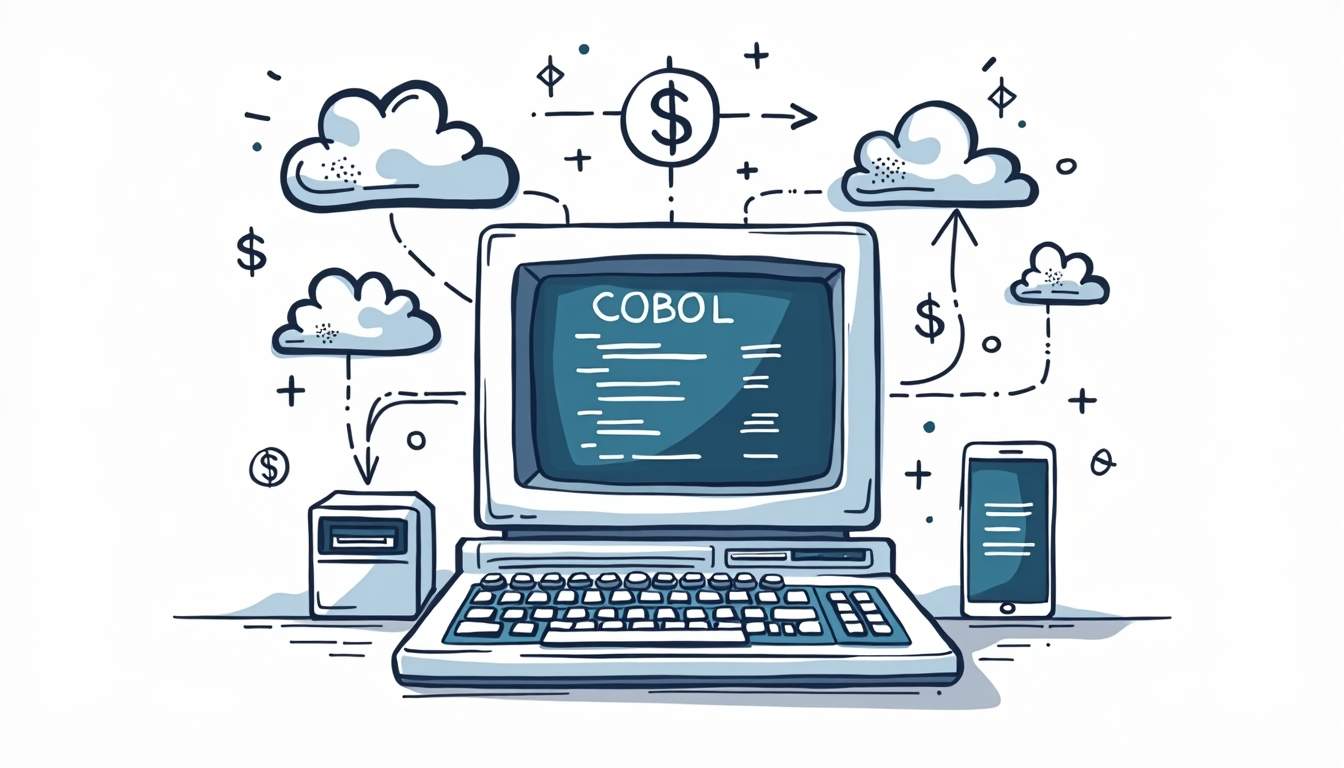
Efforts directed at incremental modernization also allow IT teams to gradually learn and adapt to new development practices alongside legacy code. The process often involves refactoring portions of the codebase that are most outdated, introducing modern concepts such as object-oriented design to areas where functionality must frequently change.
The gradual approach minimizes risk and provides tangible improvements over time.
This strategy’s staged nature also tends to be more palatable to stakeholders. With ongoing improvements, project costs are more easily controlled and budget overruns prevented. Small refactoring efforts, when successfully implemented, can yield marked improvements in system performance and maintainability.
AI-driven Modernization Tools
Artificial Intelligence is increasingly playing a central role in the modernization of legacy systems. AI-driven platforms have successfully modernized legacy COBOL code into Java while drastically shortening development times.
Recent research shows AI-driven systems achieved a 93% accuracy rate in modernization projects, reducing complexity where required by up to 35% and decreasing coupling by 33%.
These tools do not simply automate code conversion; they provide insights into performance bottlenecks and map out modernization pathways, making adjustments data-driven and precise.
In 2023 alone, more than 850 companies deployed AI-driven tools to identify optimization pathways that yielded a 21% reduction in unplanned downtime.
AI-driven modernization platforms are particularly beneficial when dealing with inherently complex systems. They help cut through the labyrinth of legacy code and pinpoint where specific updates can deliver the most significant improvements.
This precision allows companies to achieve modernization goals without a complete system rewrite-a process that could otherwise be both risky and expensive.
Implementing APIs and middleware
One effective strategy for modernization is the use of middleware and APIs. By creating interfaces that bridge legacy systems to modern applications, enterprises can extend the functionality of COBOL applications without rewriting them entirely.
Using middleware enhances communication between disparate systems and enables safe, modular enhancements that preserve the original logic.
Implementing middleware solutions provides flexibility, making it easier to create a phased modernization plan. This approach allows legacy COBOL systems to interact seamlessly with cloud services, modern data analytics tools, or customer-facing mobile applications.
The core system remains stable while the peripheral functions benefit from modern features and improved user experiences.
Focused re-engineering efforts
Re-engineering parts of the code, rather than the entire system, is another practical path forward. Focused re-engineering seeks to convert only those portions of the COBOL code that are critical to high-growth business processes.
For example, converting business-critical modules into Java or other modern languages can help integrate legacy applications with newer systems while reducing reliance on outdated coding techniques.
This selective approach means that businesses can allocate resources efficiently, focusing on modernization where it will have the greatest impact. It also helps in preserving the integrity of applications that have been optimized through decades of use.
The result is an improved system that feels cutting edge without the full risks of a "rebuild from scratch" scenario.
Companies that choose this route frequently experience lower costs and shorter project timelines.
Integrating modern development practices
Modernizing legacy COBOL systems is not only about converting code. It is also about integrating new development practices that foster rapid and reliable application updates. For many organizations, the security and reliability of legacy systems underpin daily operations.
The transformation requires a dual approach: retain the core functionalities that have proven reliable and incorporate new methodologies that enhance efficiency.
Incorporating agile development practices, containerization, and continuous integration/continuous delivery (CI/CD) workflows into legacy systems is a strategy that many companies have adopted with success.
Migrating parts of the business logic into modern frameworks-often through a gradual conversion process-allows systems to benefit from new security, scalability, and performance enhancements.
Using automated testing frameworks can also ensure that updates do not introduce new issues. This layered approach to modernization means that each update builds on a secure foundation, introducing new features or capabilities without risking the entire operation.
Such careful integration is often the difference between a smooth evolution and a disruptive, costly failure.
Expert perspectives and real-world impact
Insights from industry experts underscore the strategic importance of evolving COBOL systems rather than replacing them entirely. Chris Livesey, Senior Vice President of Application Modernization and Connectivity at Micro Focus, emphasizes that “COBOL remains vital in new ecosystems and its continued evolution is a foundational element of IT and business change”.
Such endorsements underline that modernization is both a technical and a strategic imperative.
Real-world examples provide further evidence of the benefits derived from modernization initiatives. In several organizations, foundational business rules embedded in COBOL programs were gradually refactored and integrated into modern development pipelines.
This process not only preserved decades of operational data and procedures but also enhanced efficiency and supported digital transformation goals.
The transformation journey is rarely a linear path. Often, it requires a dual-layered approach: while some segments of the operation continue running on a robust legacy core, other segments gradually adopt modern coding languages and practices.
Consequently, businesses maintain operational stability even as they leverage emerging technologies for competitive advantage.
Balancing legacy and innovation
Legacy systems provide essential stability, but they must evolve to support innovation. Many enterprises are intentionally blending the stability of COBOL with the agility of modern technologies. This hybrid approach means keeping the robust elements of legacy systems while slowly integrating modern components that enhance scalability, accessibility, and interoperability.

Modernization efforts often involve creating a dual environment where legacy systems continue functioning side by side with newer applications. Such a strategy provides a cushion during the transition, allowing IT teams to troubleshoot new integrations without compromising core operations.
In the end, the objective is to allow legacy systems to retain their role as the operational bedrock while the overall system becomes more dynamic and responsive to market demands.
This balance is critical in industries where even slight disruptions can have high costs. By embracing change carefully and deliberately, organizations safeguard not only their technological investments but also their revenue and customer trust.
The long-term competitive advantage lies in this strategic, balanced approach rather than in radical system overhauls.
Future-proofing your infrastructure
Looking forward, the modernization of COBOL systems is not solely about catching up with contemporary technology; it’s about future-proofing an enterprise’s entire IT infrastructure. Embracing modular architectures and microservices, for example, offers a path to separate legacy components from newer, more agile services.
Such separation ensures that future updates or complete replacements can be performed with minimal risk to daily operations.
An integrated ecosystem combining legacy stability with modern modularity can empower companies to adapt to emerging technologies more swiftly. This adaptation is particularly important as digital platforms continue to evolve at a rapid pace.
The blend of old and new is a testament to the enduring value of COBOL, but also an acknowledgement that the future calls for flexibility and responsiveness.
Practically, this means investing in training and cross-skill development for IT personnel. When seasoned programmers and new engineers collaborate, best practices emerge that respect the unique characteristics of legacy systems while integrating modern development principles.
Additionally, companies can consider partnering with technology providers who specialize in legacy system modernization-ensuring that the transformation is both secure and cost-effective. Wesdnesday Solutions, for example, and our Control service, can help organizations modernize their current legacy system without a big-rewrite or disruption.
Adopting a long-term modernization mindset
Modernization must be viewed as an ongoing journey rather than a one-time fix. Companies that have moved away from the idea of a single, sweeping replacement and instead embrace continuous, incremental enhancements are better positioned to manage risk over time.
With legacy systems like COBOL, gradual investment in modernization is not just about reducing costs today-it’s also about positioning the organization to respond to market changes tomorrow.
Adopting a long-term mindset means weighing the benefits of a stable, proven technology against the opportunities presented by emerging systems. For many organizations, this involves keeping part of the legacy system intact while systematically modernizing other components.
Regular reviews and audits become essential in identifying areas where modern practices can intersect with legacy reliability.
This proactive investment in modernization minimizes the risks inherent in legacy systems. Instead of waiting for problems to force rapid change, companies become active participants in securing and streamlining their IT infrastructure.
The focus on continuous improvement helps maintain operational stability and demonstrates a commitment to keeping pace with digital innovations.
Our final thoughts on modernization legacy COBOL system without a massive budget
Modernizing legacy COBOL systems on a tight budget may seem daunting, but it is achievable with a focused and strategic approach. By embracing incremental modernization, harnessing AI-driven tools, integrating modern development practices, and ensuring the delicate balance between legacy systems and new technology, businesses can upgrade critical operations without risking disruption.
The statistics support this pragmatic path forward: a significant portion of COBOL code is still at the heart of enterprise operations, and companies that adopt phased modernization strategies experience reduced downtime and improved system performance.
So, targeted efforts in converting portions of COBOL into modern languages like Java not only bring improved flexibility but also align legacy systems with current digital demands.
This measured approach, endorsed by experts such as Chris Livesey and backed by robust data, indicates that the evolution of COBOL is both strategic and necessary. Modernization is less about abandoning a venerable technology and more about combining its proven reliability with the efficiencies of modern code and agile practices.